
Makinenizi arayın

23306 Mevcut Reklamlar

İşleme türüne göre arama

Satılacak bir makineniz mi var?İlanınızı hemen yayınlayın

Macchinari industriali
Yükleniyor...
Yükleniyor...

Ortaklarımız

Hadi konuşalım...

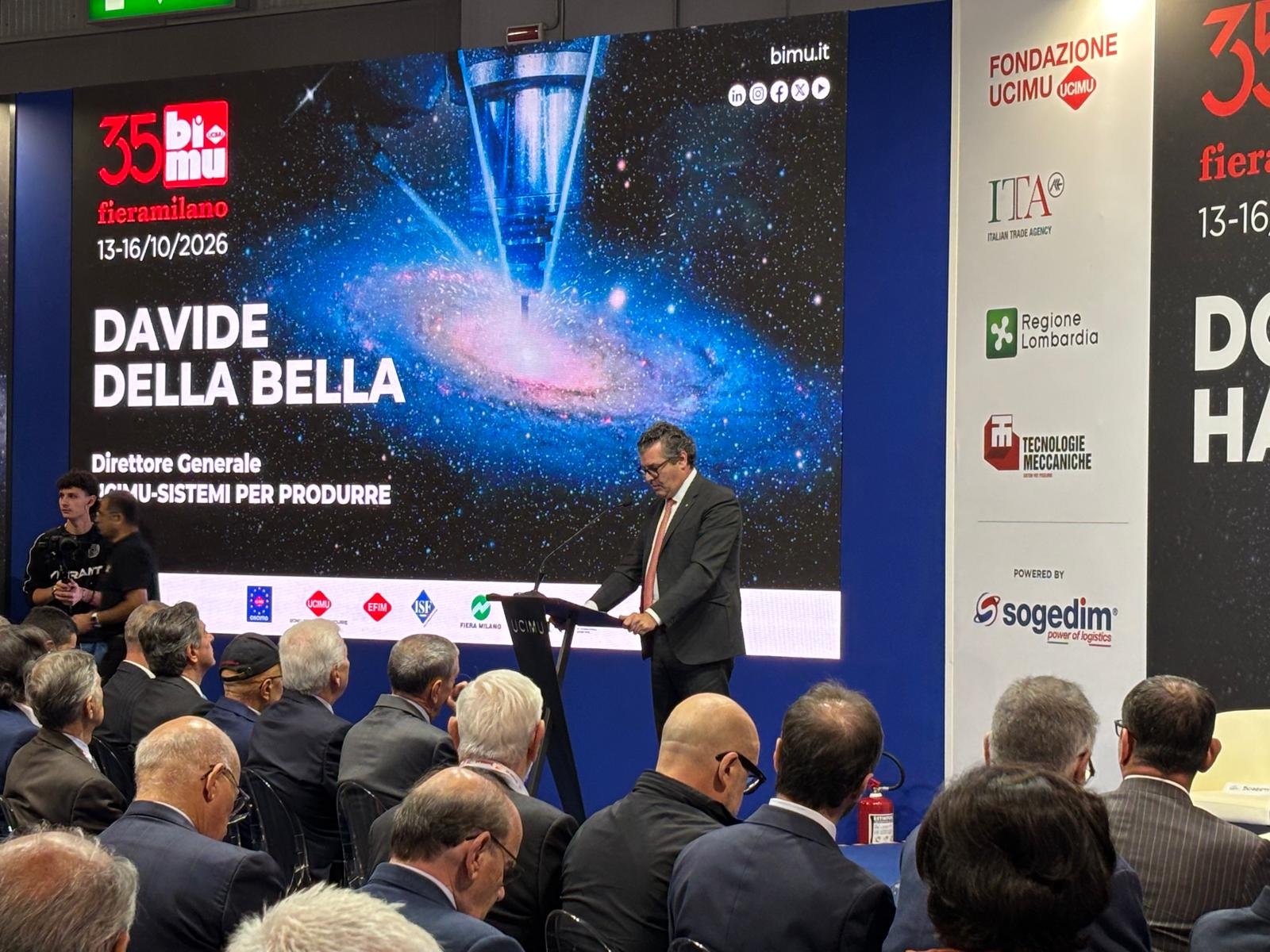
BI-MU futuretech award: innovation takes center stage

The competition, in its first edition, celebrates the cutting-edge solutions exhibited at 35.BI-MU. The awards ceremony is scheduled for Friday, October 16th. The BI-MU FUTURETECH AWARD 2026 will debut at 35.BI-MU, the biennial machine tool exhibition taking place at Fieramilano Rho from October 13th to 16th. This award celebrates the most innovative manufacturing solutions exhibited in the fair's pavilions. Designed to promote technological development in the field of machine tools, robots, and automation, the competition undoubtedly emphasizes the value of the event, which confirms its ability to document and anticipate technological advances in the world of industrial production. The BI-MU FUTURETECH AWARD is open to all exhibitors (direct and indirect) at 35.BI-MU and is divided into three categories: Mechanical Technology – includes solutions related to the creation of machine tools and their accessories, production systems for the mechanical industry (including robotics and additive manufacturing), and the processes they perform; Digitalization of Processes or Services – includes enabling technologies such as IoT, AI, Digital Twin, and design/simulation systems, machine vision, and advanced automation, as well as all applications (such as smart manufacturing, predictive maintenance, consistent quality, etc.) that lead to production efficiency, competitiveness, and the creation of added value from data; Economic, Environmental, and Social Sustainability – includes efficient, upgradeable, and reliable machines capable of reducing costs, consumption, and emissions, as well as safe, inclusive, and regulatory-compliant work environments. The finalists will be selected by a Judging Committee composed of five university professors, who will conduct a documentary pre-selection of the submitted projects. The winners, three for each category, will be chosen only after a technical evaluation of the solutions presented directly at the stands during the fair. The winners will receive official recognition, several prizes, and a package of visibility initiatives aimed at promoting their innovation. The awards ceremony will be held on Friday, October 16, the last day of the event, at the BI-MUpiù arena.


Beyond the Machinery: ITM INDUSTRY EUROPE Highlights Revealed

Is Polish industry afraid of artificial intelligence? How can profits hidden in process errors be recovered, and why can’t a modern factory exist without the support of scientists? The upcoming edition of ITM Industry Europe 2026 is much more than just a machine exhibition. It offers four days of intensive crash tests, intellectual sparring between manufacturing practitioners, and presentations of technologies that only yesterday seemed like a futuristic vision. This year’s programme challenges conventional wisdom and focuses on hard, market-driven practice.A varied programme and dynamic demonstrations in special zones add a unique twist to what has long been the cornerstone of ITM INDUSTRY EUROPE – a massive exhibition featuring several hundred top brands from around the world. The entire event centres around four halls: AUTOMA, MACH-TOOL, SURFEX, and WELDING, which comprehensively showcase the state of modern engineering.– We are eager for this year’s event to make a significant impact on the industry. Access to knowledge and solutions is key for us, which is why we have launched free accreditation for professionals. We want everyone with an interest in modern industrial technologies to be able to make the most of the trade fair’s extensive programme – both the offerings at exhibitors’ stands and the packed programme of seminars, debates and presentations on the fair’s stages in dedicated zones – emphasises Anna Lemańska-Kramer, Deputy Director of ITM INDUSTRY EUROPE.The ITM INDUSTRY EUROPE fair will take place from 26 to 29 May 2026 at the MTP Poznań Expo. At the same time, visitors will also be able to attend the Modernlog, Subcontracting, and European Science Fair exhibitions. The Factory Under Pressure from AI – a preview of the DBR77 zone at ITM 2026During the upcoming ITM INDUSTRY EUROPE 2026 fair in Poznań, the third day of events on the main stage will feature an intense debate on the future of Polish industry. Organised by DBR77, the meeting under the slogan “The Factory Under Pressure – Is Polish Industry Afraid of Artificial Intelligence?” will become a focal point for substantive discussions on the real impact of AI on the efficiency of production facilities. The programme for the event, scheduled for 28 May, has been designed as a dynamic space for the exchange of experiences between technology leaders and business practitioners, focusing on the operational and technological aspects of digital transformation.The event will open with a presentation on the role of artificial intelligence in modern production management, flowing seamlessly into a series of expert panel discussions. The first panel will focus on the robotisation and adaptability of vision systems, while the next will examine the conditions necessary for the effective implementation of AI in anomaly detection and operational planning processes. The programme will conclude with a logistics debate on decision automation in warehouses and an open practical training session, during which DBR77 experts will demonstrate specific tools supporting the day-to-day work of management staff.“Our aim at this year’s ITM is to demystify artificial intelligence and present it as a concrete tool that is already solving real-world problems on the shop floor today. We do not wish to speculate about the distant future; that is why we have invited companies to participate in panels demonstrating tangible results from their implementations. The DBR77 zone is intended to be a place where technology meets hard data and business practice, proving that Polish industry not only need not fear AI, but can gain a significant competitive advantage thanks to it – announces Katarzyna Szwarocka, CMO & R&D Specialist at DBR77.The organisers are placing particular emphasis on the visual aspect of the presentations, encouraging participants to share video footage, system demonstrations, and specific case studies. Thanks to this approach, visitors to the main stage on the third day of the fair will have a unique opportunity to see how advanced algorithms and autonomous systems function in a real production and logistics environment, operating under time pressure and high efficiency requirements.Assembly Arena – A Strategic Concept for the Assembly Innovation ZoneAlongside promoting theoretical ideas, the ITM Industry Europe trade fair focuses on practical engineering within the Assembly Arena – an innovative concept for assembly innovation. This is a dedicated demonstration and networking space, designed as a comprehensive response to the growing needs of the modern manufacturing market in terms of efficiency, quality, and process ergonomics. The Assembly Arena zone is organised under the patronage of the following companies:GM Automatyka, an expert in the integration of industrial automation systems, and KWG Group, a supplier of innovative solutions for manufacturing, specialising in ergonomics, assembly tools, and process optimisation. Assembly Arena has been designed as an interactive platform where engineers, production managers, and operations directors can explore a full range of automation solutions, covering both robotic and manual processes. The thematic scope of the zone is extensive and includes, among other things, advanced automation of threaded connections, pick-to-light systems, smart component positioning and clamping techniques, and specialist measurement and vision systems.This zone becomes a true arena where partners’ ready-made solutions meet real production challenges, offering visitors a unique opportunity to experience the synergy between humans and machines in conditions close to reality. The Assembly Arena concept goes beyond the traditional exhibition format, serving as an interactive educational space that promotes the idea of Lean Robotics and the digital transformation of assembly processes through the implementation of AI systems in quality control. Visitors from key sectors, such as automotive, household appliances, medtech, and furniture, will be able to test hybrid workstations utilising 3D cameras and operator-support tools that have a tangible impact on improving ergonomics and minimising errors. Assembly Arena is a place where people come for concrete solutions, where innovators, integrators, and end customers build a collaborative ecosystem, shaping the modern face of manufacturing facilities.REPETYTORIUM: Don’t tighten the screw, optimise the processA key highlight of this year’s ITM Industry Europe programme will be REPETYTORIUM, an original content format initiated by Jakub Giełbaga, an experienced process practitioner who has spent years analysing and optimising workflows on production floors and within company management teams. Under the provocative slogan “Don’t tighten the screw, optimise the process”, this event moves away from traditional conferences or panels based on slide presentations. REPETYTORIUM has been designed as an intensive intellectual sparring session and a form of mastermind, where knowledge is not lectured but developed through dynamic conversation with invited guests – industry practitioners, business owners, and operational managers.This initiative is a direct response to a real gap in Polish industry: the lack of a space for honest, unfiltered discussion about why, despite costly investments, companies often fail to achieve the expected efficiency. The event format comprises five one-hour thematic blocks, each offering nearly 30 minutes of substantive debate between leaders, followed by time for in-depth interaction with the audience. The programme focuses on specific business challenges, such as identifying hidden production losses, process flexibility, fostering a culture of eliminating micro-downtime, and the analysis of lost benefits (WUKO).A particular highlight will be a session dedicated to misguided manufacturing investments that, rather than optimising operations, create chaos – aimed at encouraging decision-makers to make responsible, process-oriented choices. REPETYTORIUM at ITM Industry Europe 2026 does not compete with the machinery fair but reinforces its purpose, demonstrating that modern industry is not just about advanced technology, but above all about the rigorous logic of the process and managerial maturity. This is an offering for those seeking a ‘roadmap’ and wishing to understand the real mechanisms governing modern production.Welding Exhibition: The Pillars of Certification and Quality Standards in WeldingFor years, the welding industry has been one of the key pillars of the ITM Industry Europe trade fair, bringing together leading players from the metalworking and steel construction sectors. An integral part of this year’s Welding Exhibition will be a two-day technical meeting designed for engineering staff and quality control specialists: “Welding – Certification of Manufacturers, Processes and Personnel According to European Standards: Current Status and New Developments.” The event will take place on 27 and 28 May in the Welding Speakers’ Corner. It is organised by GSI SLV Polska Sp. z o.o., a recognised certification body that has been supporting Polish heavy industry since 2005. Experts from SLV Polska, with many years of experience in metal processing and a wide range of accreditations, will present the current requirements regarding the supervision of production processes and the certification of NDT and welding personnel. The meeting will focus on the practical aspects of implementing European standards, which are essential for confirming the technical competence of plants and their employees within the supply chain for modern industry.Technology in Action: From Advanced Coating Technology to Interactive Demonstration and Networking ZonesThe ITM Industry Europe 2026 programme is complemented by a series of special zones where innovations are tested under real-world conditions. The Industrial Coating Association will run a comprehensive educational programme, combining specialist lectures with dynamic surface treatment demonstrations. In parallel, the editorial team of MM Industrial Magazine will host a series of in-depth discussions with market leaders as part of the MM Speakers’ Corner, providing a platform for the exchange of key business insights. An element of healthy competition and practical component testing will be offered by the Pneumat & BECKHOFF GAMES zone, where advanced pneumatics meets precision control through interactive automation stations.Operational safety and the protection of personnel will be the focus of the Safety Zone, organised in collaboration with Troax Poland. The highlight of this programme will be spectacular live crash tests, demonstrating the effectiveness of fencing systems and flexible barriers in critical situations. A technological complement to modern production lines will be the Collaborative Robot Zone, located in the AUTOMA Hall, with Schmalz as its main partner. Visitors will have a unique opportunity to compare over a dozen cobot models from leading brands, observing them in dynamic industrial applications. These interactive spaces demonstrate that modern industry is not just about technology, but above all about its safe and effective integration with human labour.The trade fair’s networking programme will feature the next instalment of an event that proved hugely successful last autumn: LinkedIn Local for Industry, taking place at the heart of the sector on 26 May. This is a space where engineers, manufacturing experts, and business owners can join forces to exchange experiences. Participants can expect a solid dose of substantive content and the opportunity for conversations that develop into real business partnerships.Science and Industry: The Cornerstone of the Modern EconomyThe European Science Fair, organised in collaboration with the Ministry of Science and Higher Education, Adam Mickiewicz University in Poznań, and the MTP Group, will run alongside ITM INDUSTRY EUROPE and is a key element of this year’s technology festival. – This is the second edition of this initiative; the first proved to be a great success, confirming the enormous potential in combining these two worlds – notes Anna Lemańska-Kramer. The exhibition will focus on the achievements of research institutes, universities, and start-ups that address the needs of modern business, In the era of burgeoning Industry 5.0, the innovative discoveries showcased at the fair have the potential for rapid implementation in factories, providing a technological advantage for Polish enterprises. Only an economy capable of global competition and built on strong partnerships with Polish science can fully realise the country’s potential. For this reason, this year’s event is becoming a strategic space for the commercialisation of research and the removal of barriers between science and industry. – A new feature of the European Science Fair 2026 is the ‘duet’ stands. These are shared exhibition spaces designed for science–business teams and university/institute–company partnerships, allowing the entire innovation process to be presented: from the research concept to actual implementation within a company. It is an integrated format that combines scientific achievements with commercial success, showcasing both research findings and solutions used by businesses on a daily basis – adds Anna Lemańska-Kramer.

16/04/2026
Bilgi için: ITM Industry Europe

The circular economy is one of the central themes of AMB 2026.

Sustainability, digitalization and automation: the key topics of AMB // AMB 2026 will also focus on the exchange of ideas and current developments "Where metal comes alive": with this new slogan, AMB opens its doors in Stuttgart from September 15 to 19, 2026. Across all ten exhibition halls, AMB offers a comprehensive overview of current technologies and highlights industry trends such as sustainability, digitalization, and automation. These concepts are brought to life through concrete application examples: sustainability is presented in the context of recycling and the circular economy, while in digitalization, the fair focuses on artificial intelligence in manufacturing, and collaborative processes serve as a vivid example of modern automation. We delve into one of these topics in a conversation with Markus Heseding , General Manager of VDMA Präzisionswerkzeuge : we talk about the circular economy, carbide sourcing and tool recycling, as well as the role of AMB 2026 as a reference event for the sector. Messe Stuttgart: Mr. Heseding, in your opinion, what will shape the sustainability debate in 2026, and what are the most important topics for the VDMA in the recycling sector? Sustainability has become a strategic economic factor. In 2026, the challenge will be to reconcile environmental responsibility, security of supply, and competitiveness. For the precision tools industry, three issues are clearly central: the recycling and return of tool packaging, the sourcing of hard metals for the metalworking industries, and the Product Carbon Footprint as a basis for transparent and comparable CO2 data. Messe Stuttgart: In the following interview, we'd like to focus on the first two points. You've always emphasized that every gram of carbide remaining in Europe is an asset. What specifically is needed to keep tungsten in the European supply chain, and where can the industry start? Competition for tungsten is increasing globally, especially because other sectors, such as the defense industry, are significantly expanding their demand. At the same time, Europe has very few primary tungsten mining projects, and our heavy dependence on Chinese supplies is risky. This is currently leading to significantly rising costs, a lack of price stability, significant supply uncertainty, and a complete lack of predictability. This is particularly critical because carbide tools are key components in the metalworking industry, in virtually all machining processes. In this context, recycling is becoming even more important. Carbide recycling in Europe has been an environmental and economic success for decades. Europe therefore needs resilient supply models that combine the circular economy, technological innovation, and fair industrial partnerships. This is why keeping tungsten in the European cycle is so crucial. Carbide scrap is a strategic resource: every gram that remains in Europe strengthens our industrial sovereignty. In recycling, we need more effective take-back systems, higher collection rates, and consistent quality standards. Our customers can also make a significant contribution by selling their carbide scrap to European partners. Our motto: "Those who commit to the European cycle remain strong in the tool technology sector!" Messe Stuttgart: In addition to tungsten recovery, the question of how to successfully market tool packaging made from recycled materials is increasingly emerging. What steps are needed to effectively promote the use of recycled materials in the metalworking industry? What are the main objectives of your packaging recycling working group? When using recycled materials, technical feasibility is rarely the issue. The challenge lies in the fact that tool packaging has a low market value, and recycling is often difficult to demonstrate as an economically viable activity. Additional obstacles include scalability, availability, and consistent quality standards. It is particularly important to collect sufficient quantities of pure material for reliable production. In the VDMA "Tool Packaging Recycling" working group, we collaborate with partners along the value chain to find viable solutions. A field trial has implemented, for the first time, a functioning system for the return and recycling of used packaging made from post-consumer recycled material, which is then tested and reprocessed. This creates a valid basis for a closed-loop system. Today, pioneering companies already offer tool packaging made entirely from recycled materials: some manufacturers have already completed the transition. These solutions will be clearly presented at AMB 2026. Messe Stuttgart: How can these three topics—hard metal recycling, recycled packaging, and CFP—be highlighted at AMB? Which practical initiatives or projects will VDMA focus on in 2026? Many companies will be presenting their latest developments at AMB, making the trade fair particularly interesting. We will also be exploring this aspect in depth at the VDMA Technology Forum, at booth B50 of the L-Bank Forum (Hall 1). We will demonstrate how sustainability, the circular economy, and digitalization can be concretely implemented in the precision tools industry. Digitalization supports these topics through transparent material flows, digital documentation, and standardized processes along the entire value chain. Numerous VDMA member companies and research partners will be presenting their solutions. We will also be showcasing the cutting-edge results of our recently completed research project on increasing the efficiency of hard metal recycling. Messe Stuttgart: To what extent can AMB, as a leading trade fair for the industry, accelerate the exchange and development of solutions to these challenges? What role do cross-industry dialogue and personal interaction play at AMB? One advantage is that AMB brings together the entire metalworking process chain. The majority of visitors will come from Germany, the beating heart of the industry. Equally important will be the international visitors, who traditionally come in large numbers from Switzerland, Austria, and Italy, but also from the Netherlands, France, Sweden, the Czech Republic, and Turkey. AMB excels at bringing together technological innovation, international reach, and the entire industrial production process chain. Especially in a period when the industry is simultaneously subjected to economic, geopolitical and industrial policy pressures, this exchange is indispensable. We all hope that AMB can provide a significant economic boost. It's a place where companies can evaluate investments in future technologies, experiment with new applications, and strategically position themselves for the next stages of development. About AMB Since 1982, AMB has presented the highlights of the international metalworking industry. "Where metal comes alive": It will also be a permanent fixture on the industry's agenda in 2026, this year from September 15 to 19. It is the international marketplace and meeting place for metalworking, showcasing the latest products, technologies, innovations, services, and concepts in all their facets. AMB is supported by sponsors VDMA Präzisionswerkzeuge, VDMA Software und Digitalisierung, and VDW Verein Deutscher Werkzeugmaschinenfabriken e.V. (German Machine Tool Manufacturers' Association).

16/04/2026
Bilgi için: AMB 2026

In 2025, exports of valves and taps reached €6.2 billion (+5.2% compared to 2024). Exports of valves and taps for civil use are also growing, exceeding €3.2 billion (+6% compared to 2024).

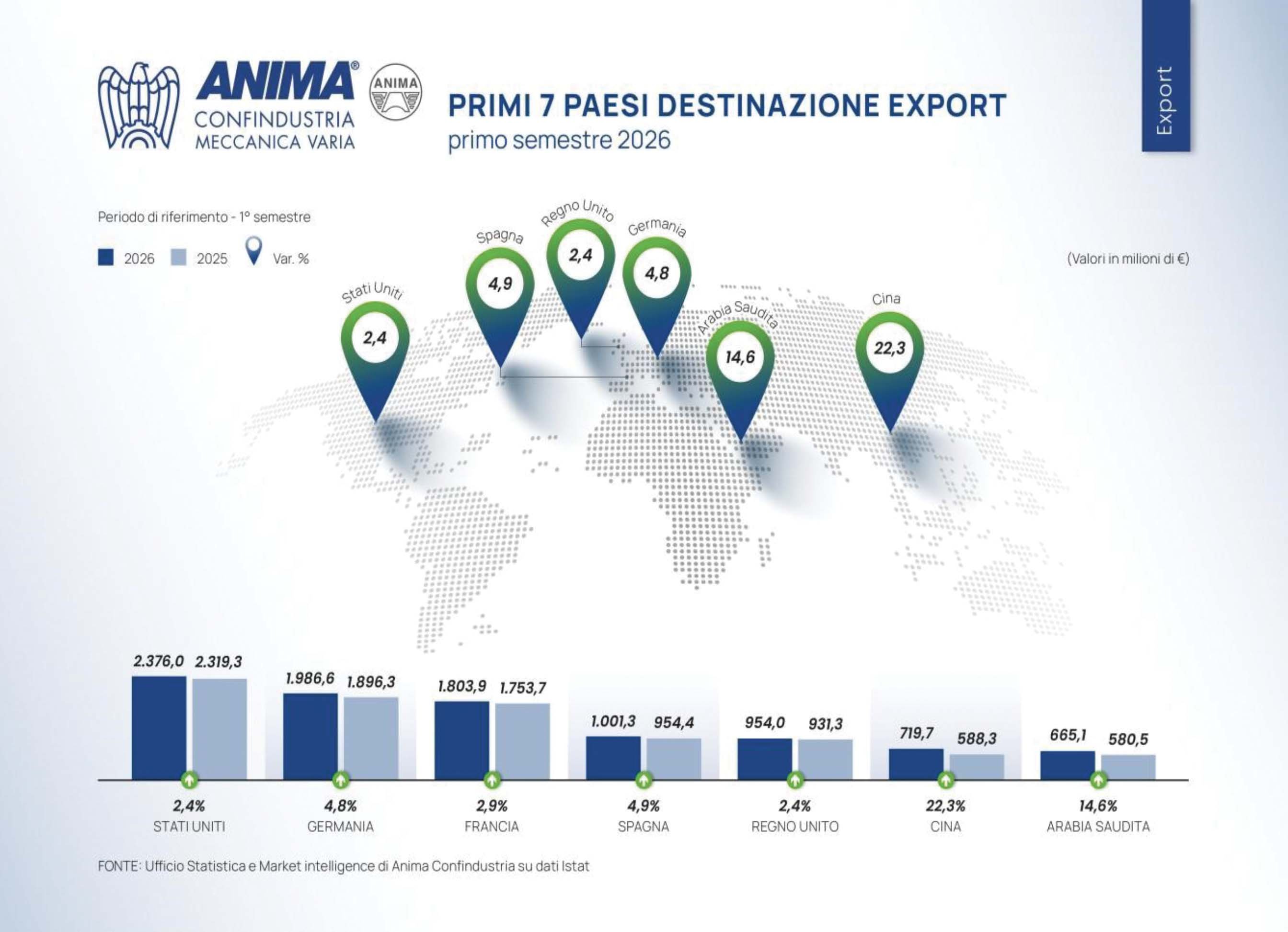
AVR – Italian Valve and Tap Manufacturers Association – will be a key player at MCE – Mostra Convegno Expocomfort, held from March 24th to 27th in Milan. In 2025, after years of contraction, exports of valves and taps for civil use to Germany will return to positive territory, with a value of 153 million euros and a growth of 12% compared to 2024 and +20% compared to 2020. Saudi Arabia is the leading destination country in terms of revenue, followed by the United States and China; Concerns remain high about the impact of geopolitical instability on strategic markets such as the Middle East, an area which overall is worth 874.9 million euros for the civil valves and taps sector alone; Other concerns include rising energy costs, currency instability, tariff uncertainty, logistical difficulties, the lack of real free movement of goods, and an unclear European regulatory framework, often perceived as poorly aligned with industry needs. AVR, in the presence of 13 international associations belonging to the International Valves and Taps Alliance, proposes to create the first "World Forum dedicated to valves and taps". The Italian valve and faucet sector remains a leading international player. According to data from the Statistics Office of Anima Confindustria, released by AVR —the Italian Valve and Tap Manufacturers' Association, affiliated with Anima —during MCE–Mostra Convegno Expocomfort , exports of the valve and faucet sector (which includes valves for construction, industrial valves, sanitary taps, and fittings) will reach nearly €6.2 billion in 2025, up 5.2% from 2024, with an estimated total turnover of €9.55 billion. Exports of valves and faucets for residential use alone exceeded €3.2 billion (+6% from 2024). Considering only residential valves and faucets, Saudi Arabia is the leading destination country in 2025, followed by the United States and China. Among the countries, the German market , after years of contraction, is returning to positive territory, with exports of €153 million and a 12% growth compared to 2024 and a 20% growth compared to 2020, reaffirming its position as the reference market for Italian exports of residential valves and faucets. This trend could offer a significant contribution to the European sector and offset, at least in part, the impact of geopolitical instability on strategic markets such as the Middle East , an area worth €874.9 million to Italy overall. Furthermore, among the countries that recorded the most positive export performances in 2025, Norway also stands out, with a 59% increase. Besides geopolitical instability and its impact on strategic markets, what other concerns do industry entrepreneurs have? 2026 will also see rising energy costs, currency instability, tariff uncertainty, logistical challenges, the lack of true free movement of goods, and an unclear European regulatory framework, often perceived as poorly aligned with industry needs. In a complex scenario like this, it is crucial to strengthen dialogue and collaboration beyond national borders, creating concrete opportunities for discussion and cooperation between businesses, institutions, and trade associations. The goal is to jointly address sensitive issues for the sector (such as PFAS, nuclear power, and lead) and identify common solutions and best practices, recognized and adopted internationally. It is precisely in this direction that AVR is committed to creating the first Global Forum dedicated to valves and faucets . This meeting aims to leverage international experiences and offer shared tools to address the main challenges common to all businesses operating in countries around the world. "The Italian valves and taps sector confirms its position as an international benchmark, thanks to highly specialized manufacturing capabilities, a strong focus on innovation, and a consolidated presence in key foreign markets, " stated Sandro Bonomi, President of AVR . " The 2025 data confirm the sector's solidity, but at the same time highlight how complex and constantly evolving the global landscape remains. In this scenario, for a highly export-oriented sector like ours, it is essential to be able to rely on conditions that support the competitiveness of companies and enhance their presence on international markets. The discussions launched at MCE with the International Valves and Taps Alliance are moving precisely in this direction: strengthening dialogue between the sector's key stakeholders and sharing a common vision of the industrial, technical, and commercial challenges that lie ahead." AVR is the federated industrial association of ANIMA Confindustria, representing Italian companies in the valve and faucet industry, with over 80 member companies. In 2025, the sector, which includes building valves, industrial valves, sanitary faucets, and fittings, is projected to generate revenues of €9.55 billion, with exports accounting for nearly €6.2 billion, more than 60% of total revenues (estimate by the Anima Confindustria Research Office). The member associations of the International Valves and Taps Alliance: AVR – Italian Valve and Tap Manufacturers Association, AGRIVAL (Spain), BVAA (UK), CIPHE (UK), EVOLIS (France), FLUIDEX (Spain), IAPMO (USA), JVMA (Japan), POMSAD (Turkey), SAI, Valves and Fittings (Sweden), SPAP (Poland), URS (Switzerland), VDMA (Germany), VMA (USA). ANIMA Confindustria Meccanica Varia is the trade organization within Confindustria (Italian Confederation of Mechanical Engineering) that represents companies in the mechanical and related sectors, a sector that employs 221,700 people, generates a turnover of €56 billion and accounts for 60% of exports (data from the Anima Research Office). The main sectors represented by ANIMA are: construction and infrastructure; material handling and logistics; food production; energy production; industrial production; and safety and environment.

02/04/2026
Bilgi için: Anima Confindustria

Transition 5.0, Anima Confindustria "The outcome of the meeting at Mimit represents a fundamental milestone in the dialogue between institutions and business representatives"

A positive phase begins for businesses under the Transition 5.0 plan: after the meeting with Minister Adolfo Urso, the reinstatement of measures to support innovation was confirmed. The delicate issue of those who were excluded from the Transition 5.0 plan, that is, those businesses that validly submitted an application for tax credits after November 7, 2025, has been resolved favorably. The drastic 65% reduction in tax credits , envisaged by the latest provisions of the Fiscal Decree and which had generated strong concerns and protests in the industrial world, has been substantially overcome thanks to constructive dialogue between institutions and businesses. The meeting took place on April 1st at the MIMIT headquarters between Ministers Adolfo Urso, Tommaso Foti, Deputy Minister Maurizio Leo, Confindustria (Italian Industrialists' Confederation), and other business associations. During the meeting, the Government reaffirmed its commitment to upholding its commitments, confirming that all properly submitted applications will be accepted. This step allows for the continued investment and innovative projects that underpin the Transition 5.0 program , aimed at strengthening the competitiveness of the national manufacturing system. The restoration of financial support for businesses requires sufficient resources to ensure financial coverage of requests. Pietro Almici, President of Anima Confindustria, commented with satisfaction : "The outcome of this meeting marks a key milestone in the dialogue between institutions and business representatives. We especially thank Minister Adolfo Urso for his willingness to help and Marco Nocivelli , Vice President of Confindustria for Industrial Policies and Made in Italy, whose role was crucial in facilitating this collaboration. Maintaining our commitments to the Transition 5.0 plan is essential to allowing our companies to continue on the path of innovation and sustainability, essential elements for the growth of our industrial system. We now trust in the rapid publication of the implementing decrees relating to the Hyper-Depreciation program." ANIMA Confindustria is the trade organization within Confindustria that represents companies in the mechanical and related sectors, a sector that employs 224,006 people, generates a turnover of €59.1 billion, and accounts for approximately 60% of exports (2025 forecast by the Anima Research Office). The major sectors represented by ANIMA are: construction and infrastructure; material handling and logistics; food production; energy production; industrial production; and safety and environment.

02/04/2026
Bilgi için: Anima Confindustria

Steel exports to slow further in 2025

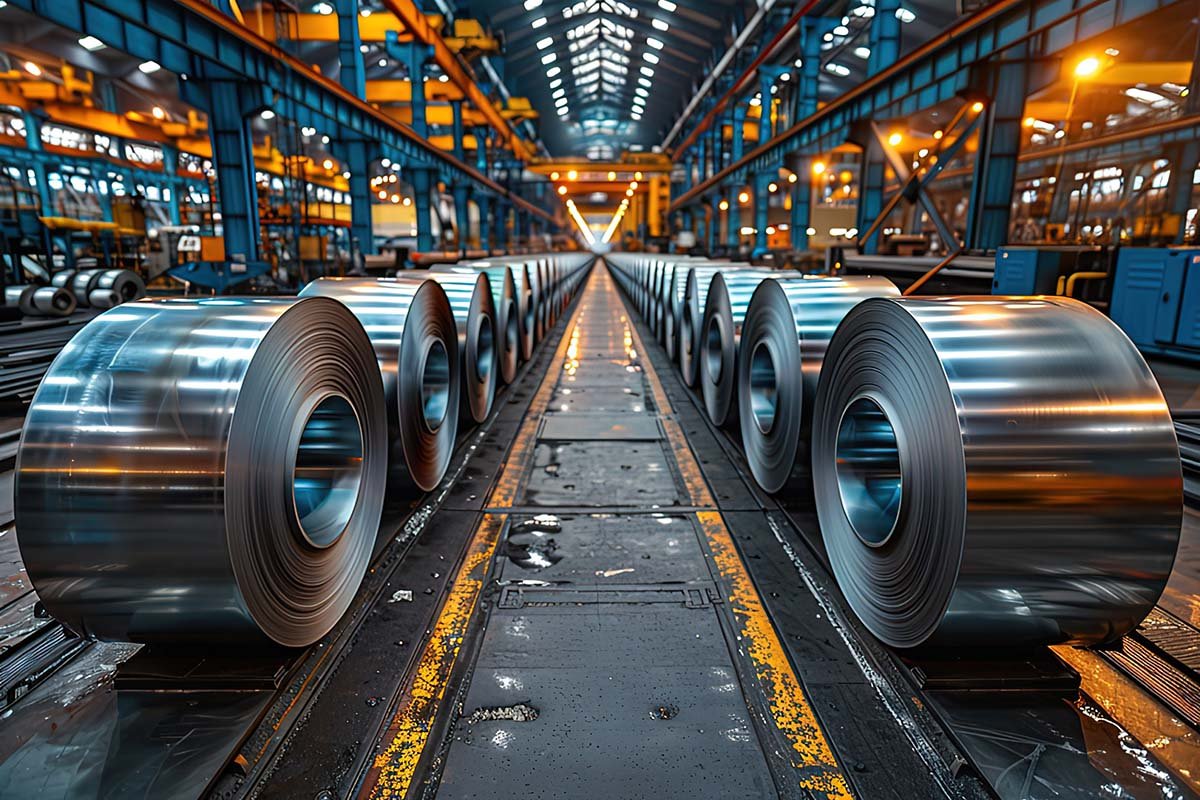
Exports decline for the third consecutive year. Analysis by the siderweb Research Office. Italian steel exports (iron and steel products, pipes, and other primary processing products) continued to decline in 2025. Last year, steel exports fell in value by 5.7% compared to 2024, from €20.9 billion to €19.7 billion. This is according to data published by Istat and revised by the siderweb Research Office . Results, caused by a progressive decline in both prices and quantities sold , which therefore record the third consecutive slowdown after the two-year growth period 2021-2022 (closed with +51.7% and +23.8%). Exports fell by the same amount as imports, which also dropped 5.7% (€21.1 billion). Italy thus confirmed its position as a net importer of approximately €1.4 billion. Looking at the data by province , we note that the top 20 steel provinces in Italy exported steel worth 16.3 billion euros, a 5.1% decrease compared to the 17.2 billion euros in 2024. The predominance of Lombardy's districts in the Top 10 is confirmed, consolidating the geography of Italian steel production hubs that was created after the 2008-2009 crisis. Higher-than-average changes were recorded in Genoa (+8.3%), which rose to 18th place; Ravenna (+7.7%), which rose to 11th place; Verona (+5.5%), which dropped one place to 12th; and Brescia (+2.0%), which remained stable at the top. The provinces that showed the most significant declines were Mantua (-14.9%), which dropped one position to fourth place; Milan (-12.8%), which remained stable in sixth place; Lecco (-12.1%), which fell to ninth place; and Aosta (-11.8%), which remained in 13th place. The top three thus saw a shift compared to 2024: the province of Brescia remained in first place, followed by Udine and Cremona. Brescia sold €1.9 billion worth of steel outside Italy, up 2% compared to 2024. Supporting the partial recovery of the Brescia hub, after last year's declines, were positive performances in all three export categories: steel products (+0.5%), pipes (+7.4%), and other steel products (+4%). Udine comes in second, with a value of €1.8 billion, a decline of 4.7%. This result has caused the Friulian province to widen its gap with Brescia, with the difference between the two areas increasing from approximately €3 million to €127 million. The declines are due to a contraction in shipments of steel products (-4.3%) and other steel-processing products (-8.2%). Finally, the province of Cremona moved up one position compared to 2024 (overtaking Mantua) and recorded exports worth €1.5 billion, a 2.8% annual decrease. In particular, the Cremona hub saw an increase in sales of steel products (+3.2%), which mitigated the more than 8% decline in pipe exports. Taranto (home to Acciaierie d'Italia) remained outside the Top 20 for the second consecutive year. Its export value fell from 362 million euros in 2022, to 281 million in 2023, to 70.4 million euros in 2024 (-75%) and to 42.0 million in 2025, a 40.3% drop compared to the previous year. Terni (home of Arvedi Ast) gained ground thanks to a decline in exports (-7.3%), less than that of the Lecco hub (-12.1%). Exports of steel products decreased by 7.8% and those of pipes by 20.8%, while sales of other primary steel processing products increased by 19.7%. Livorno (where JSW Steel Italy operates in Piombino) dropped from 23rd place in 2024 to return to the Top 20, ranking 19th. In 2025, the Livorno hub's exports were valued at €188 million, down 4.6% due to slowdowns in steel products and pipe sales abroad.

27/03/2026
Bilgi için: Siderweb

Linde MH Italia completes the acquisition of Tre-P Material Handling Torino, strengthening its presence in Piedmont and Valle d'Aosta.

The acquisition of Tre-P Carrelli and its subsidiary NTP Operations consolidates Linde Material Handling's presence in Northern Italy, guaranteeing customers even more efficient and widespread services in the provinces of Turin, Vercelli, Cuneo, Biella and the Aosta Valley. Linde Material Handling Italia, the Italian subsidiary of Linde Material Handling, a world leader in the supply of intralogistics solutions, announces the completion of the acquisition of Tre-P Carrelli Srl, a historic dealer based in Turin, and its subsidiary NTP Operations Srl. The operation, initiated with the signing of a preliminary agreement on 4 November 2025, concluded with the acquisition of the shares of Tre-P Material Handling Torino Srl, a newly established company into which the business branches of Tre-P Carrelli Srl and NTP Operations Srl were merged, which takes on the new company name of Linde Material Handling Torino Srl This acquisition represents an important step in the growth and consolidation of the Linde MH brand in the Italian intralogistics market. The transaction is part of the development strategy launched two years ago with the opening of the new branches in Bolzano and Adriatica (in the province of Chieti), aimed at consolidating its direct presence in the region and further enhancing the quality of its services. With this acquisition, the company significantly strengthens its presence in the strategic Piedmont region, including the provinces of Turin, Vercelli, Cuneo, and Biella, as well as the Aosta Valley region, confirming its commitment to providing customers with an increasingly comprehensive, efficient, and structured service. "We are very pleased with this acquisition, which allows us to further consolidate the brand's presence in a key territory for the Italian market. Our customers will benefit from the quality and efficiency of Linde services," comments Luca Esposto, Vice President Sales & Service for Linde MH in Italy. " This transaction reflects our development strategy in Italy, aimed at being ever closer to our customers' needs, with innovative solutions and timely, excellent technical support," he concludes. About LINDE MH Linde Material Handling develops high-performance goods handling solutions customized to meet individual customer needs. Linde MH, in addition to being one of the world's leading manufacturers of forklifts and manual and automated warehouse equipment, offers a wide range of fleet management solutions, driver assistance systems, mobile robots and a wide variety of software solutions, consulting services and technical support. The Linde MH brand represents maximum performance, achieved through technological innovation, superior standards of ergonomics and operator safety and a wide range of energy options. In Italy, Linde MH can count on a network of 9 branches, 24 dealers and partners, and over 800 specialized service technicians, to respond promptly and effectively to customer needs.

14/04/2026
Bilgi için: Linde MH Italia

New STILL AXL 15 iGo autonomous electric pallet truck

Presented as a world premiere at LogiMAT 2026, the AXL 15 iGo automates truck loading and unloading STILL, a leading supplier of intralogistics systems and equipment, is presenting a true milestone in intralogistics at LogiMAT 2026: the first production-ready solution on the market for automating truck loading and unloading without the need for fixed safety technology at the loading bay. With the new autonomous AXL 15 iGo electric pallet truck, STILL is closing one of the last major gaps in warehouse automation: the management of incoming and outgoing goods directly at the loading bay. Automation comes to the loading bay The loading bay area is traditionally characterized by tight deadlines, staff shortages, night shifts, and challenging operating conditions, from high summer temperatures to freezing winter temperatures. Furthermore, limited space, variable trailer geometries, and very stringent safety requirements must be addressed. While many companies have long since automated warehouses, internal transport, and handling systems, truck loading and unloading has remained a process considered difficult to automate. “With the AXL 15 iGo, we're filling a historic gap in intralogistics, making automated truck loading and unloading an accessible and easily implementable standard for the first time,” explains Matteo Piantanida, Head of Sales Automation at STILL in Italy. “Our solution makes receiving and shipping goods more efficient, safe, predictable, and reliable. Process standardization enables repeatable workflows, significantly increasing operational stability and transparency. This is a key step in our strategy: to offer scalable automation solutions for every area of ​​intralogistics.” Thirty pallets in thirty-five minutes in an autonomous, flexible and safe way The AXL 15 iGo autonomous pallet truck was specifically developed for automating truck loading and unloading: two vehicles operating in tandem can autonomously load up to 30 EPAL pallets in approximately 35 minutes. Thanks to innovative localization and positioning logic integrated with a new, holistic safety concept, the truck can automatically recognize the trailer's internal configuration and precisely position the pallets. A particularly significant advantage for users is that the AXL 15 iGo does not require any fixed safety systems at the gate, such as scanners or reflectors installed on the bay or in the trailer. This makes the solution highly flexible, quick to implement, and easy to integrate into existing operations. Safety and precision in the tightest spaces To ensure safe handling and precise navigation, the AXL 15 iGo uses two complementary technologies: on the outside of the trailer, it uses Visual SLAM 3D localization technology; on the inside, it uses LiDAR-based localization, which allows for centimeter-level accuracy. The truck also integrates LiDAR safety scanners, camera systems, light and acoustic signals, and 3D pallet detection. A solution for multiple sectors The AXL 15 iGo is particularly suited to sectors with high volumes of pallets and standardized load units, such as 3PL operators, food logistics, retail, and manufacturing companies. With a load capacity of up to 1,500 kg and a speed of up to 2 m/s, the truck can meet a wide range of industrial needs. Integration into automated fleets is scalable via a VDA 5050 interface, a dedicated fleet manager, and open APIs for warehouse management systems (WMS). World premiere at LogiMAT 2026 STILL will present the AXL 15 iGo to the public for the first time at LogiMAT 2026, in Hall 10, Stands B40 and B41. The truck will be available immediately after the trade fair. “Our customers ask us for solutions that can be implemented immediately. That's why we chose to launch the product only once it was ready for rapid market release,” says Piantanida. About STILL Specializing in intralogistics solutions, STILL has a product portfolio that includes forklifts, warehouse technology, connected systems, and services. Founded in 1920 by Hans Still, the company offers customized and customer-optimized solutions, backed by excellent service. STILL's goal is to make intralogistics "intelligent," developing solutions that make warehouse operations smoother and more efficient, protect the health of workers, and simultaneously meet the highest sustainability standards. With this goal, STILL is committed to promoting new solutions for electric mobility, automation, fleet and energy management, as well as circularity, i.e., the consistent conservation and recycling of resources. Headquartered in Hamburg, STILL employs 7,100 people and is present in 89 countries. The Italian organization can count on the most solid and widespread sales and service network in the country, consisting of 10 direct branches, over 50 dealers and partners, 950 service technicians and over 170 sales representatives.

02/04/2026
Bilgi için: Still

Tezmaksan: Making automation accessible to every factory

Cobots are changing manufacturing, but the real value comes from seamless integration Cobots have radically redefined expectations for automation, emerging as a direct response to some of the industry's most pressing pressures. Persistent labor shortages, rising production demands, and the physical limitations of traditional factory layouts have made flexibility a priority. Their appeal lies in their combination of simple integration, affordable investment levels, and the ability to operate safely. In this article, Hakan Aydoğdu, CEO of Tezmaksan Robot Technologies, a company specializing in CNC automation, reflects on how collaborative technologies are redefining automation. The latest World Robotics 2025 report highlights the rapid acceleration of this shift towards automation. Industrial robot installations reached 542,076 units in 2024, more than double the figure recorded a decade earlier. This is the fourth consecutive year in which annual installations have surpassed the half-million mark. Asia continues to dominate, accounting for nearly three-quarters of all new installations, while Europe and the Americas account for much smaller shares. These numbers reveal not only the speed of adoption but also the global imbalance in automation readiness. The global automation landscape Recent research by Make UK highlights that approximately 36% of manufacturing vacancies are difficult to fill due to a lack of candidates with the right skills, qualifications, or experience. Collaborative robots are playing an increasingly important role in filling this gap. By taking on repetitive, physically demanding, or high-risk tasks, cobots help manufacturers maintain production levels even in times of labor shortages. Cobots consistently deliver increased productivity and more reliable quality, freeing human workers to focus on complex or value-added tasks. They also help improve workplace well-being by reducing stress and injuries, and their simple programming makes automation achievable without long wait times or extensive training. For many companies, this combination accelerates the path to a measurable return on investment. Navigating the new regulations In the manufacturing sector, cobots are increasingly used to optimize assembly lines and improve operational workflows. Studies indicate that cobots can significantly improve productivity by automating repetitive tasks and allowing human workers to focus on more complex tasks that require cognitive skills. Regulatory frameworks are evolving alongside this technological momentum. The EU Machinery Regulation 2023/1230, which replaces the previous Machinery Directive, was adopted in 2023 and will be fully applicable from January 2027. It introduces a more rigorous approach to safety, liability, and cybersecurity for advanced machines and collaborative systems. The new requirements push manufacturers toward clearer accountability and more rigorous compliance processes, signaling that compliance and safer integration will become a key factor in the implementation of automation in the coming years. For engineers, this has direct implications for the design, implementation, and validation of collaborative robotic systems. In logistics environments, cobots are increasingly used for palletizing, order picking, and intralogistics material handling, where integrated vision systems, force sensors, and safety scanners enable close human-robot collaboration without traditional safety cages. In automotive manufacturing, cobots support precision assembly, screwdriving, quality control, and machine servicing, improving cycle time consistency and reducing ergonomic strain on operators. Best practices for seamless integration include conducting task-specific risk assessments in line with ISO 12100 and ISO/TS 15066, implementing safety-certified monitored shutdowns, speed and separation monitoring, and ensuring robust cybersecurity controls for connected robotic cells. Engineers are also advised to prioritize modular system architectures, standardized industrial communication protocols (such as PROFINET or EtherCAT), and digital simulation tools to validate layouts and workflows prior to physical implementation.   Challenges in legacy production environments Many manufacturing environments are aging or are built around legacy systems that weren't designed for robotics. Restricted layout plans, outdated infrastructure, or patchy connectivity can complicate integration. When new technology meets older equipment, the process can become costly or time-consuming if the two aren't seamlessly aligned. A robot's capabilities alone don't determine how collaborative automation will work. Installing and configuring robotic systems, integrating software, and maintaining everything involved can push a team beyond its current capabilities. The initial costs, from the equipment itself to facility modifications and staff training, can seem high, especially in the current economic climate. Traditional robots, typically built for fixed, repetitive tasks, often require extensive reprogramming every time they change products or layouts, resulting in downtime that can quickly erode their overall advantage. To address these limitations, manufacturers are adopting increasingly flexible automation approaches that prioritize rapid deployment, reconfigurability, and scalability of investments, especially for small and medium-sized operations. For example, the CubeBOX EcoLEAN-V1 and V2 allow systems to be repositioned and adapted as workflows evolve. This flexibility allows manufacturers to scale automation incrementally without tying production to fixed layouts. This reflects a broader shift towards agile automation, solutions designed to adapt to changing production needs. EcoLEAN is available in various configurations to support different payloads, part sizes, and space constraints, enabling deployment in a wide range of production environments. The right investment A Deloitte survey of 600 manufacturing executives in 2025 found that 80% of them plan to invest 20% or more of their improvement budgets in smart manufacturing initiatives this year, with a focus on core tools and technologies. This level of commitment signals a clear shift in the industry: manufacturers no longer view digitalization and automation as optional upgrades, but as essential capabilities that will define competitiveness in the years to come. While collaborative technology is driving this transformation, it is flexibility, mobility, and financial accessibility that will ultimately redefine how manufacturing operates and who has access to the benefits of automation.

30/03/2026
Bilgi için: Tezmaksan

Makino F6: High stability (roughing+milling)2

The Makino F6 vertical machining center celebrated its European premiere at EMO 2025. It is designed for stable, sustained high-precision machining of plastic molds, injection molding dies, and die-casting molds in particular. Its design ensures exceptional thermal stability and high-speed performance for superior surface finishes and reduced cycle times. What makes the F6 so special The four pillars of Makino's F6 concept are rigid design, spindle technology, thermal management, and intelligent software. The strengths of this vertical machining center include spindle technology with core cooling and under-race lubrication, excellent thermal behavior in normal environments, precision and long-term reliability for superior surface quality, and an automation-ready design. Optimized for 3D contoured geometries and tight-tolerance applications in the mold and die industry, the F6 offers high levels of precision for long machining hours and an extended Y-axis travel of 650 mm to accommodate increasingly square molds. Main features Structural Rigidity and Thermal Stability: Using finite element analysis (FEA) to design the machine's extremely rigid structure, the f6 dampens vibrations for long-term precision, while the unique axis configuration eliminates overhangs and ensures full axis support throughout the entire work envelope. Ball screws and cooled-core nuts maintain thermal equilibrium during high-speed operations. Motor flange cooling prevents any heat transfer from the motor to the machine structure, while cooling the support bearings improves their lifespan and thermal stability. Spindle Innovations: Core cooling, under-race lubrication, Oilmatic closed-loop temperature control, and multi-plane balancing to reduce vibration and improve surface finish are innovative features resulting from Makino's leadership in spindle technology. The f6 features a 20,000-rpm HSK A63 spindle as standard, while a 30,000-rpm HSK-F63 spindle is available as an option. Motion Control and Software: Developed for high-feed rate, tight-tolerance 3D machining, this machine's Super Geometric Intelligence (SGI.5) software maintains high accuracy even with complex NC data and significantly reduces cycle times compared to standard CNC systems. Multiple advanced motion modes allow users to customize the machine's behavior to specific job requirements. The f6's Professional 6 control integrates Fanuc hardware and a Windows Embedded operating system to offer ease of use on a 15-inch multi-touch screen, with a layout that adapts to the operator's workflow from setup to execution. Automation and Monitoring: The large side door for robot integration, top access for overhead crane operations, and easy access to the automatic tool changer (ATC) and spindle make the f6 automation-ready. The optional machine monitoring system allows real-time monitoring of machine condition, production, and tooling. Chip Management and Maintenance: Efficient chip removal is ensured by a five-nozzle system (four cooling nozzles and an air blower) around the spindle, optional through-spindle air and coolant, a front-mounted chip tray accessible during machining, and an optional conveyor for large-volume chip removal. Maintenance of the f6 has been simplified thanks to centralized access to the pneumatic, hydraulic, and lubrication systems. Company Profile Makino Milling Machine Co., Ltd. is recognized as a leading technology and service provider in the machine tool industry. The company is listed on the Tokyo Stock Exchange and employs approximately 4,800 people in the Americas, Europe, and Asia. Its revenue for the fiscal year ending March 31, 2025, was €1.4 billion. Makino's broad range of high-quality manufacturing solutions includes machining centers for component production and mold and die manufacturing for a wide range of applications in the aerospace, automotive, off-highway vehicle, industrial components, and microtechnology industries. Makino Europe employs 250 people at technology centers and offices in Germany, Italy, France, Spain, and Slovakia, focusing on marketing, sales, application engineering, and customer support.

27/03/2026
Bilgi için: Makino

Compactness, control and performance: Linde MH expands its offering with the new Ri14 – Ri18 reach trucks.

Linde Material Handling (MH) presents a new series of reach trucks to the Italian market, designed to ensure efficiency, safety, and ergonomics in warehouse applications. At LogiMAT 2026 , Linde MH presents the new Ri14 – Ri18 reach trucks , expanding its offering with a range designed for warehouse applications, where compactness, safety and operational efficiency are decisive levers. With a load capacity of 1.4 to 1.8 tons, the new models are positioned in the standard application range, offering a targeted balance of productivity, safety, and operator experience. The compact design, with an integrated lithium-ion battery, allows for optimal use even in narrow aisles, making these trucks particularly suitable for distribution centers, retail, and industrial sectors such as food, automotive, and chemicals. As Samuele Albertini , Sales Training & Product Support Manager at Linde MH Italia, emphasizes: "The new reach trucks expand our offering for all companies requiring agile and versatile vehicles for daily operations. The Linde Ri range combines build quality, safety, and comfort, providing an effective solution for all warehouse handling, storage, and picking tasks." Designed for efficiency in warehouse operations The new Linde Ri14 – Ri18 trucks were developed to optimize space utilization and improve productivity in material handling operations. With an overall length of 1,215 mm and a turning circle (AST) of 2,709 mm, they enable efficient operation even in narrow aisle environments, while lift heights of up to 11 meters allow for maximum utilization of storage capacity. Performance can be further increased with the optional PowerDrive and PowerLift functions, which increase travel speed by up to 18% and lifting speed by up to 16% respectively, significantly improving operating times. Two different mast series ensure high residual capacities, while the Linde Load Control system ensures precise and smooth movements, with millimeter-precise load control. The Linde dual pedal control allows for intuitive control of the travel, simplifying operations and reducing response times. For multi-shift applications, a replaceable lithium-ion battery is also available, ensuring uninterrupted operation. Integrated security for operator and infrastructure Safety is a key element in the development of the new range. The standard all-wheel braking system, combined with hydraulic brakes on the load wheels, ensures short stopping distances regardless of load weight or mast position, offering maximum control at every stage of operation. The Linde Curve Assist system automatically adjusts the speed when cornering based on the steering angle, increasing vehicle stability and reducing the risk of overturning. The elevated driving position improves visibility of the load and the surrounding environment, while optional features such as the reinforced glass panoramic roof, shoulder protection and advanced assistance systems, including Linde Safety Guard and Rack Protection Sensor , help prevent collisions and damage to the racking. Ergonomics and comfort for long shifts The driving position is designed to reduce fatigue and improve operator well-being. Complete decoupling from the chassis absorbs shocks and vibrations, while the suspension seat and numerous adjustments for the steering wheel, seat, and pedals allow the driving position to be tailored to individual needs. Access to the vehicle is facilitated by a low, wide entry with a non-slip surface, ideal for frequent entry and exit. Numerous storage compartments complete a workstation designed for practicality and order during daily activities. Business continuity and simplified maintenance The new Ri series is designed to ensure high availability and longevity, while reducing operating costs. All maintenance-relevant components are easily accessible, allowing for quick service and reduced downtime. The integrated 14.3 kWh lithium-ion battery ensures high energy efficiency and can be replaced with a more powerful 21.4 kWh version for more intensive operating requirements. Furthermore, thanks to the modern electronic architecture, software updates and new features can be installed remotely (over-the-air), ensuring continuous improvement of vehicle performance over time. About LINDE MH Linde Material Handling develops high-performance goods handling solutions customized to meet individual customer needs. Linde MH, in addition to being one of the world's leading manufacturers of forklifts and manual and automated warehouse equipment, offers a wide range of fleet management solutions, driver assistance systems, mobile robots and a wide variety of software solutions, consulting services and technical support. The Linde MH brand represents maximum performance, achieved through technological innovation, superior standards of ergonomics and operator safety and a wide range of energy options. In Italy, Linde MH can count on a network of 6 branches, 2 established dealers, 21 dealers and partners, and over 800 specialized service technicians, to respond promptly and effectively to customer needs.

26/03/2026
Bilgi için: Linde MH

SICK S.p.A. achieves Great Place to Work 2026™ certification

SICK SpA achieves Great Place to Work® 2026 Certification, strengthening a culture of trust and transformation. SICK SpA has been officially certified as a Great Place to Work® for 2026. The certification, based entirely on employee feedback, confirms the company's commitment to building a culture of trust, accountability, and continuous improvement. The survey recorded an exceptionally high participation rate, reflecting strong employee engagement and a genuine desire to contribute to the organization's development. The results confirm a solid foundation of trust among teams and provide clear direction for further strengthening leadership effectiveness and organizational clarity. The certification comes at a strategic moment, as the organization continues its transformation within the Europe South & West Cluster. This achievement demonstrates that business evolution and a focus on people can go hand in hand. In recent years, SICK SpA has consistently worked to strengthen the credibility of its leadership, clarify roles and responsibilities, and promote a culture open to dialogue and feedback. Congratulating SICK SpA on achieving the certification, Sarah Lewis Kulin, Vice President of Global Recognition at Great Place To Work , said: “Successfully achieving this recognition clearly demonstrates how SICK stands out among the best places to work, offering its employees an excellent work environment.” Recognition by Great Place To Work confirms the strength of a healthy and inclusive work environment, capable of strengthening people's morale and productivity, as well as representing a key element in attracting and retaining the best talent. Massimo Azzerri, Senior Vice President SICK Europe South & West, states : “ Receiving this recognition based on direct employee feedback is a significant achievement. During a phase of transformation and strategic development, maintaining trust, transparency, and accountability is crucial. This certification highlights the solidity of our Italian organization and demonstrates the constant commitment of leaders and teams to fostering a work environment geared toward growth, the development of skills, and a sense of belonging .” Great Place to Work® is the global authority on organizational culture assessment, evaluating companies based on trust, fairness, pride, and team spirit. For SICK Italia, this recognition confirms not only a positive work environment but also the consistency between leadership principles and daily actions. SICK continues to invest in the development of its people and remains committed to strengthening its position as an employer of choice in the industrial technology sector. SICK is hiring . To explore career opportunities and join a company that puts people and performance at the center, visit: https://www.sick.com/it/en/career/w/career About SICK SICK is one of the world's leading suppliers of sensor solutions for industrial applications. Founded in 1946 by Dr. Erwin Sick and headquartered in Waldkirch, Breisgau, near Freiburg, the company is now a technology and market leader in its field and is represented globally with 63 subsidiaries and holdings, as well as numerous agencies. SICK employs over 10,000 people worldwide and generated group sales of €2.1 billion in 2024. Further information is available at: www.sick.com About Great Place to Work Certification™ The Great Place to Work® Certification™ is one of the most prestigious recognitions aspired to by companies wishing to be considered employers of choice. It is the only certification based entirely on employee self-reports about their work experience, specifically their consistency in a trusting work environment. Great Place to Work certification is recognized globally by employees and organizations and is the international benchmark for identifying and promoting excellent employee experience. Each year, over 10,000 companies in over 60 countries participate in the Great Place to Work certification process. About Great Place To Work® As the global authority on organizational culture, Great Place To Work® provides over 30 years of research and analysis to help organizations become great places to work for everyone. Its proprietary platform and For All™ model allow companies to assess the experience of every employee. The most effective organizations earn Great Place To Work Certification™ or are included in the prestigious Best Workplaces™ rankings. Learn more: greatplacetowork.com

19/03/2026
Bilgi için: SICK Spa

Fuarlar ve etkinlikler

Bültenimize abone olun
Endüstriyel dünyanın en son haberleri hakkında güncel kalmak için
Haber bülteni görseli L’industriale
Dati Legali

L'industriale s.r.l.
P. IVA: 12212870153
Codice Fiscale: 12212870153

Sede Legale

Via Carlo Dolci, 32
20148 Milano (MI)
Italy

Registro Imprese

Iscrizione R.I.: 12212870153
REA: MI-1539011
Capitale sociale: Euro 10.400,00 i.v.

Top
This website is protected by reCAPTCHA, therefore the Google privacy policy and terms of service apply.